A new open-access study in Integrated Environmental Assessment and Management, led by ARCHE Consulting, proposes an updated bioavailability-based Environmental Quality Standard (EQS) for zinc in European freshwaters, supporting more consistent compliance assessment under the Water Framework Directive.
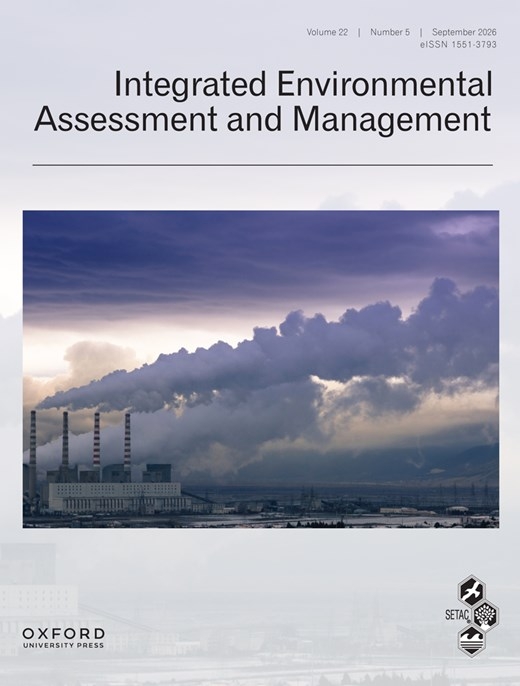
A new bioavailability-based EQS for zinc under the EU Water Framework Directive
Zinc is listed as a River Basin Specific Pollutant under the EU Water Framework Directive (WFD) in 23 countries. Yet the national annual average Environmental Quality Standard (EQS) values currently in use vary widely, from 1.0 to 205 µg Zn/L. Because the toxicity of zinc to aquatic organisms depends strongly on local water chemistry, a scientifically sound EQS needs to take bioavailability into account.
In the paper "A new zinc bioavailability-based Environmental Quality Standard for compliance assessment under the European Union-Water Framework Directive", recently published as an open-access advance article in Integrated Environmental Assessment and Management, in which both the ecotoxicity basis and the bioavailability models behind the zinc bioavailable EQS was updated, following the existing WFD guidance on deriving EQS values.
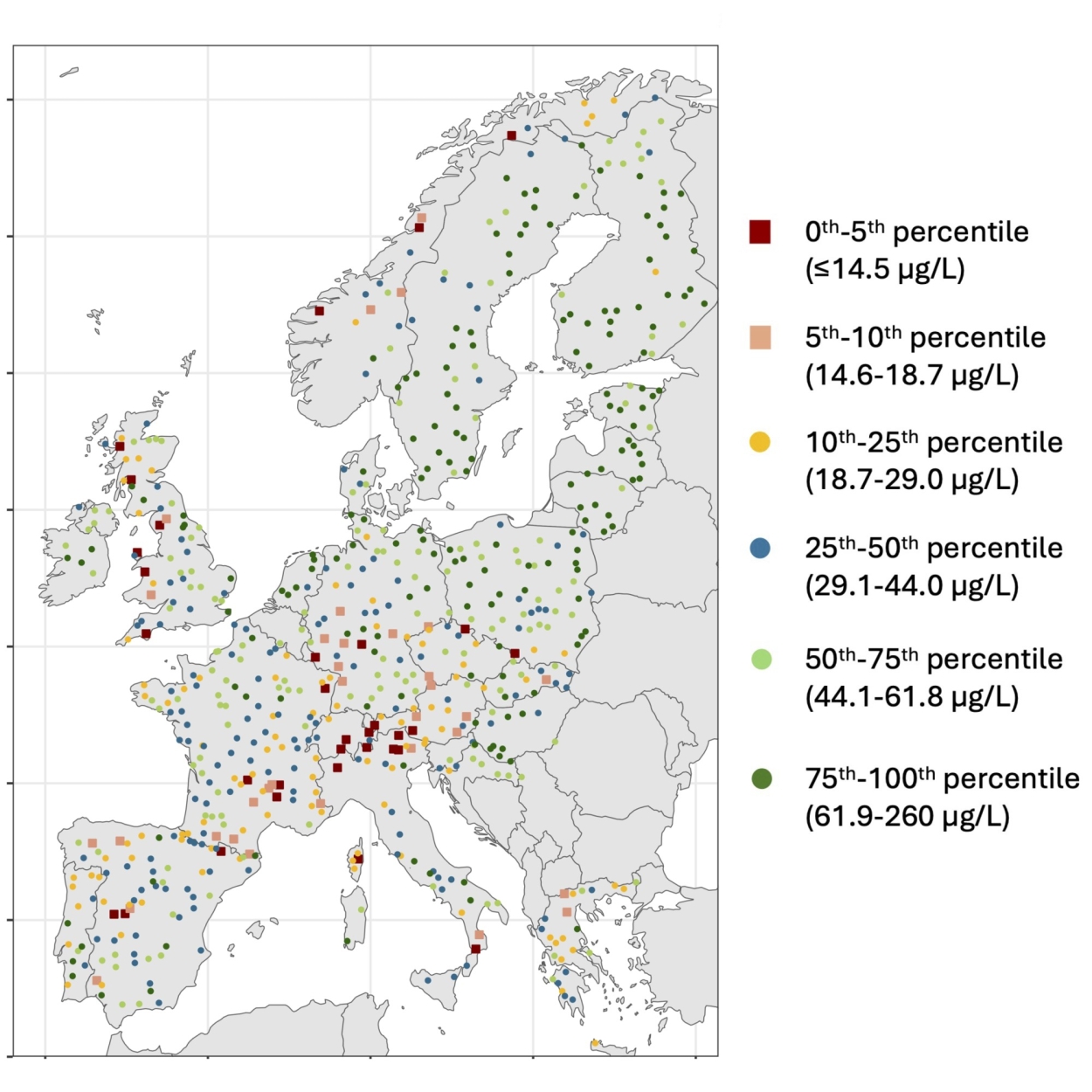
Figure 3 from the paper (map of site-specific HC5 values across Europe), credited as "Nys et al. (2026), Integr Environ Assess Manag, CC BY 4.0".
The study brings together several key elements:
- An updated chronic freshwater ecotoxicity database of 208 high-quality data points covering 40 species, meeting the minimum data requirements for species sensitivity distribution extrapolation under the WFD guidance.
- Revised zinc bioavailability models for algae, invertebrates and fish, optimised to the gBAM structure, using WHAM VII as the underlying speciation model, and validated with independent data for ten aquatic species.
- A proposed EU-wide bioavailable EQS of 11.2 µg dissolved Zn/L as a first-tier screening level, which is protective for more than 98% of the European sites assessed.
- Confirmation of the protectiveness of the EQS by mesocosm and field studies.
- Site-specific thresholds for higher-tier assessments via the latest bio-met v6.0 tool.
Together, this tiered approach supports regulators, water managers and industry in assessing zinc risks consistently across Europe, and in focusing mitigation where it is most needed.
The work was carried out by Charlotte Nys and Patrick Van Sprang, in collaboration with prof. Karel De Schamphelaere (Ghent University), Stephen Lofts (UK Centre for Ecology & Hydrology) and Chris Cooper, Frank Van Assche and Howard Winbow (International Zinc Association).
The study was funded by the International Zinc Association.
Metals bioavailability, including bioavailability models and their use in environmental risk assessment and compliance checking, has been a core part of ARCHE's scientific work for many years. We support industry and authorities in applying these tools in regulatory frameworks such as the WFD and REACH.
Read the full publication in Integrated Environmental Assessment and Management.
Questions about bioavailability-based assessment of metals?
Get in touch with our team!
Contact Charlotte Nys for more information on this work.